

Leading Teams Into the Unknown: The Leadership Tools That Will Define 2027 and Beyond
Interdependence recognizes that individuals bring different strengths, experiences, and perspectives to a shared objective. Rather than viewing collaboration as a sign of weakness or dependency, effective teams understand that their collective capabilities exceed what any one member can accomplish alone.

The Silent Cost of Leadership: What Organizations Lose When Employees Stop Speaking Up
Creating an environment where employees speak openly is not accomplished through a single initiative, workshop, or leadership announcement. It requires consistent behavior reinforced through daily interactions.

The Humility Dividend™: What Organizations Gain When Leaders Stop Protecting Their Importance
The most consequential expression of leadership humility may not be what a leader says about themselves, but what they are willing to make possible for others.

The Masks We Wear in Leadership: Why Authenticity Matters More in the Age of AI
Every Halloween, millions of people put on masks, step into different identities, and temporarily become someone other than themselves. The following morning, the costumes are put away, the decorations begin to come down, and life returns to normal. Yet in many workplaces, the practice of wearing masks continues throughout the year, often without anyone recognizing it.

The Human ROI: Why Your Employees Are the Most Important Investment in AI Transformation
Technology creates the opportunity. Leadership develops the people who turn that opportunity into measurable results.

The AI Leadership Readiness Gap: Why Organizations Are Investing in Technology Faster Than They Are Preparing Their People
Organizations that treat AI primarily as a technology investment risk overlooking the conditions required to generate sustained value. Organizations that approach AI as both a technological and human transformation have an opportunity to develop capabilities that extend beyond any individual platform.

The Leadership Legacy Paradox: Are You Building an Organization That Can Succeed Without You?
Would the organization continue operating with the same confidence and effectiveness? Would employees feel empowered to make decisions, resolve challenges, and maintain established standards? Or would progress slow as teams waited for direction from someone who was no longer available?

The Efficiency Illusion: When Doing More Becomes the Enemy of Doing Better
A leader who questions whether a performance target is producing the intended outcome is not necessarily resisting measurement. They may be protecting the organization from optimizing the wrong behavior.

The Competence Trap: When Being the Best at Your Job Isn't Enough to Make You a Great Leader
A promotion may recognize what an employee has accomplished, but leadership development must prepare that employee for what comes next.

The Leadership Development Gap: Are We Building Better Organizations or Just Measuring Them More Efficiently?
Throughout my career, I've had opportunities to lead teams, develop employees, manage operational challenges, and help organizations navigate change. More recently, my work implementing emerging technologies has provided another perspective on the relationship between people, processes, and organizational performance. One observation has remained consistent: Organizations can invest heavily in systems designed to improve performance while sometimes overlooking the leadership behaviors that make sustainable performance possible. I've also witnessed something that no dashboard can fully capture—the transformation that occurs when an employee begins to recognize their own potential because someone took the time to develop it.

We Don't Have to Agree to Work Together: Protecting Workplace Culture in a Divided World
Sometimes the most constructive outcome is simply recognizing that two people see an issue differently and choosing to move forward respectfully. Not every conversation needs a winner, and not every difference of opinion needs to be resolved.

The Potter’s Hands: Why Great Leaders Shape Environments, Not People
Seven lessons from the potter’s wheel about trust, empowerment, patience, and the art of building extraordinary teams.

When Company Culture Turns Toxic: How to Recognize the Warning Signs and Rebuild What’s Broken
Why identifying an unhealthy workplace is only the beginning, and why meaningful cultural transformation requires honesty, accountability, and leadership willing to change.

Your Employees Aren’t Resisting AI. They May Be Resisting How You’re Leading It.
Discover why employee resistance to AI may be a leadership problem, not a technology problem, and how trust, communication and culture drive AI adoption.
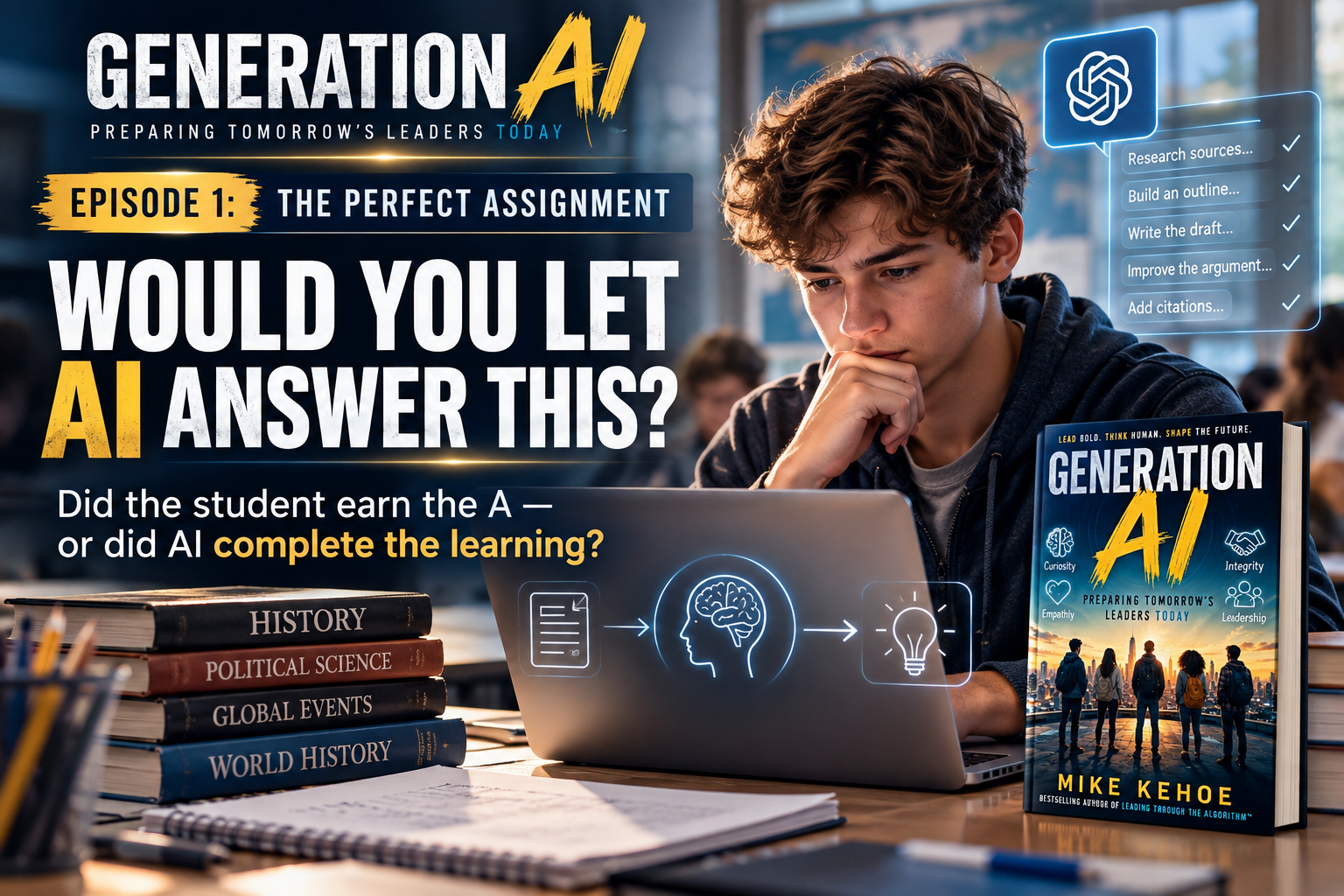
Would You Let AI Answer This? Episode 1: The Perfect Assignment
What happens when a student earns an A on an AI-assisted assignment but struggles to explain what they supposedly learned? In the first installment of Generation AI™: Would You Let AI Answer This?, we explore the growing line between AI helping students think and AI doing the thinking for them—and why critical thinking may become even more important as artificial intelligence enters the classroom.

The Human Judgment Paradox: The Smarter AI Gets, the More Judgment Leaders Need
As artificial intelligence becomes better at analyzing information, identifying patterns and recommending decisions, human judgment is not becoming less important—it may be becoming more valuable. The challenge for leaders is no longer simply learning how to use AI, but knowing when to trust it, when to question it and when human experience, context and accountability must take the lead.

The Leadership Gap AI Is Exposing
“AI may be changing how organizations work, but it is also exposing leadership challenges that existed long before AI arrived. The question isn't simply whether organizations are ready for AI. It's whether their leaders are ready to lead through it.”

AI Is Changing the Way We Work. Leadership Still Determines Where We Go.
Artificial intelligence is moving quickly. Perhaps too quickly for many of the conversations we are having about it. Every week brings another announcement: a more capable model, a new automation platform, an AI agent, a smarter retail system, a new workplace application, or another prediction about how dramatically AI will reshape our future. It is easy to become consumed by what the technology can do. But I believe there is another question that deserves just as much attention: What will we do with it?